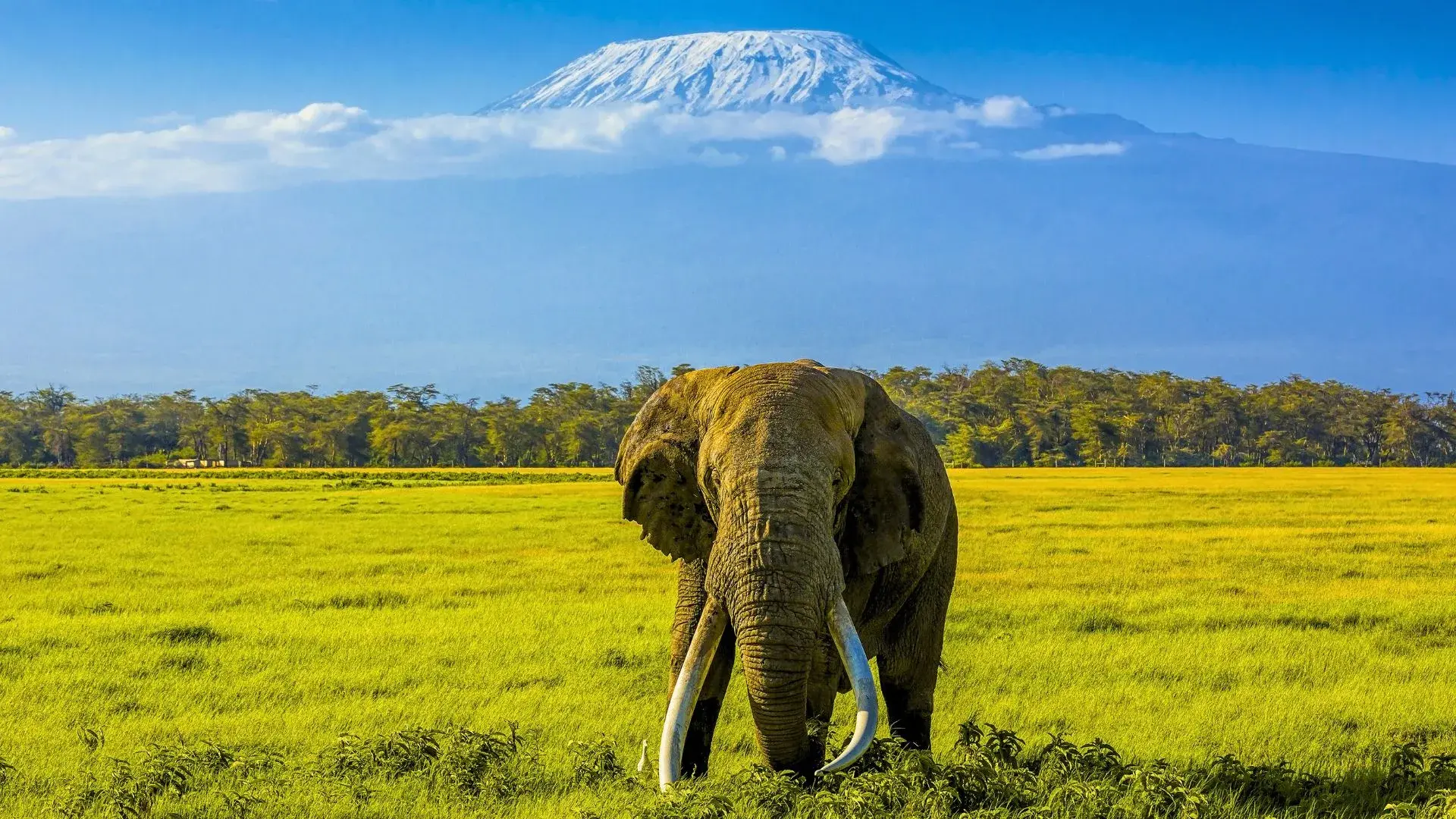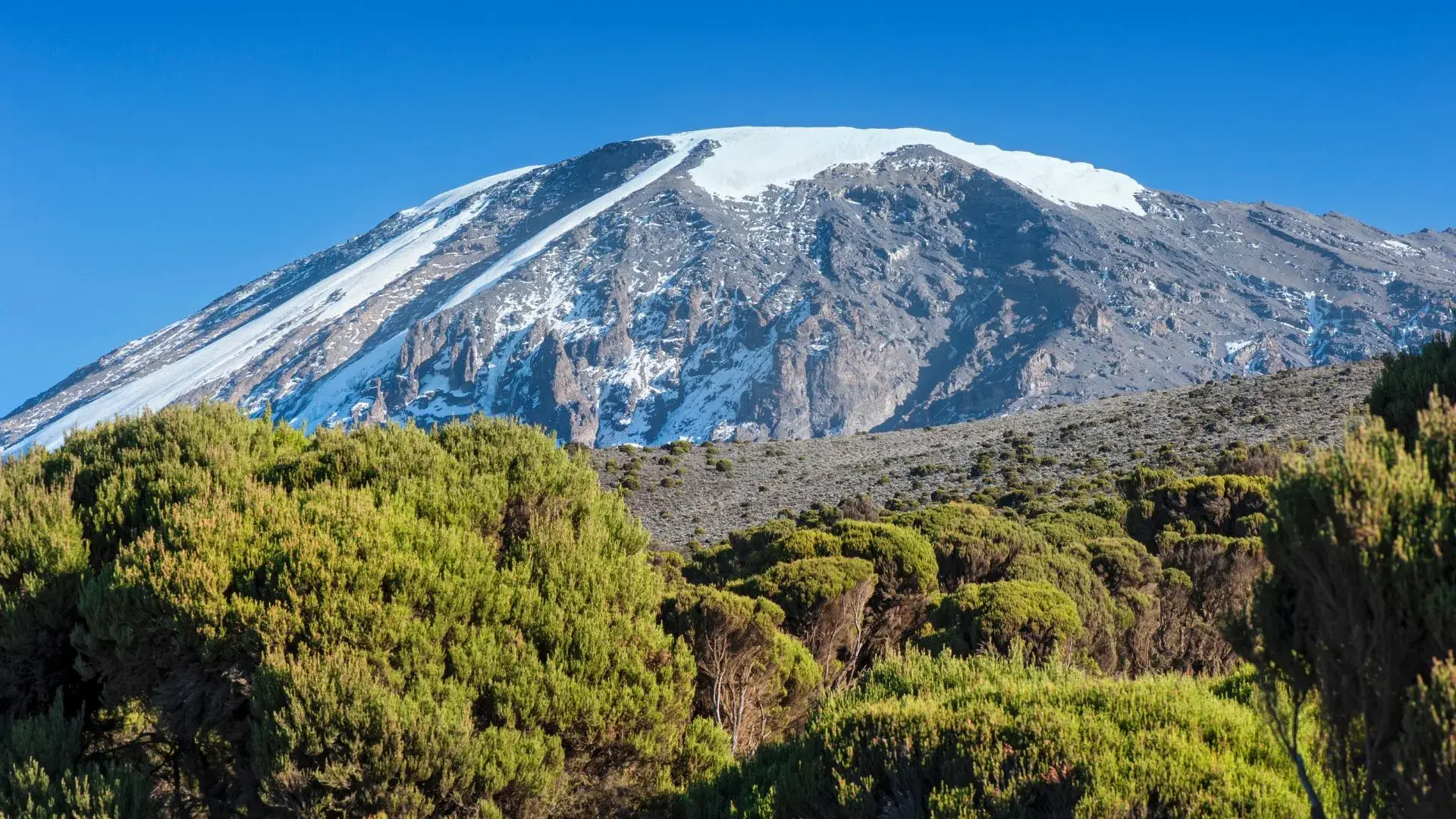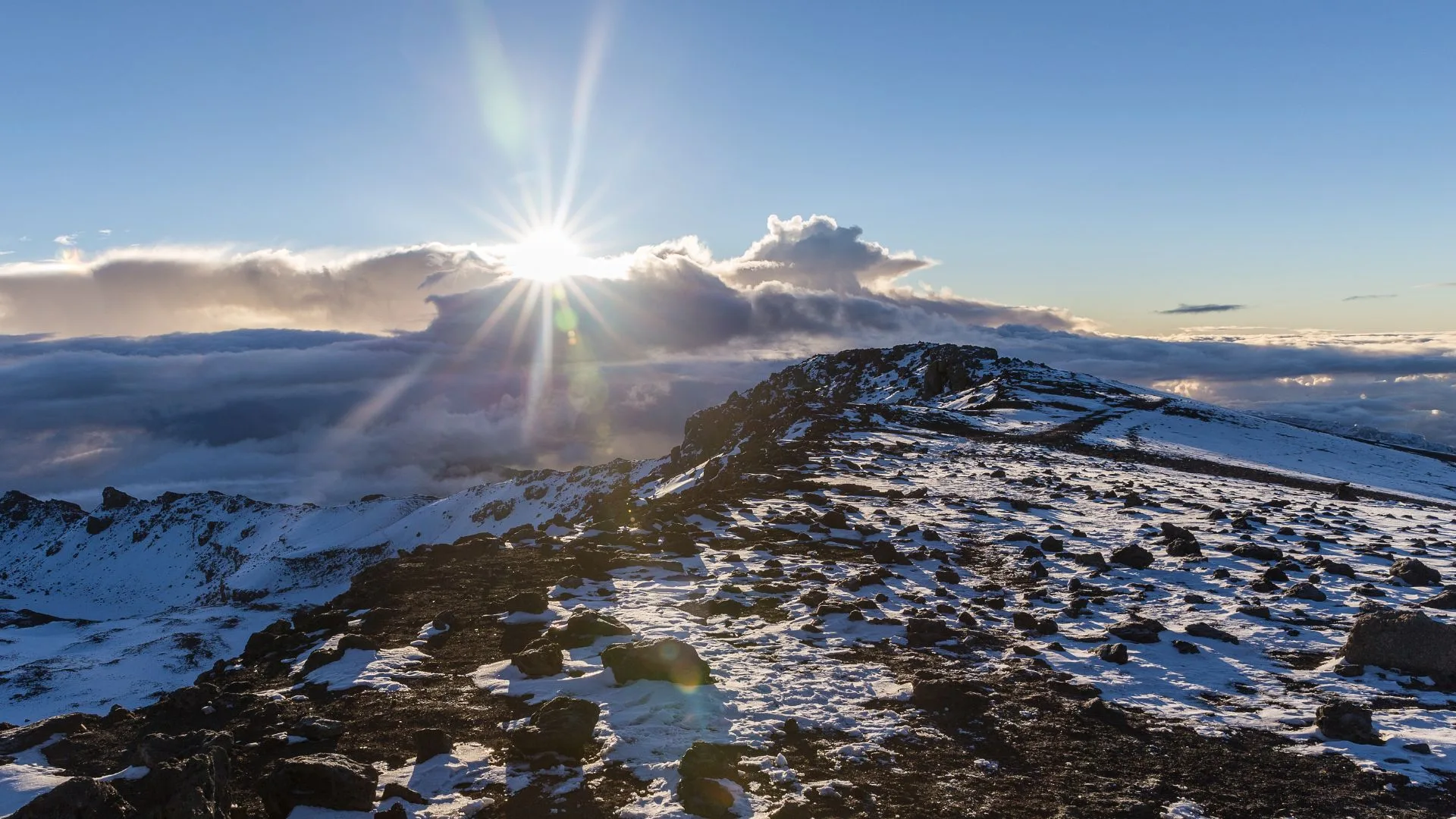


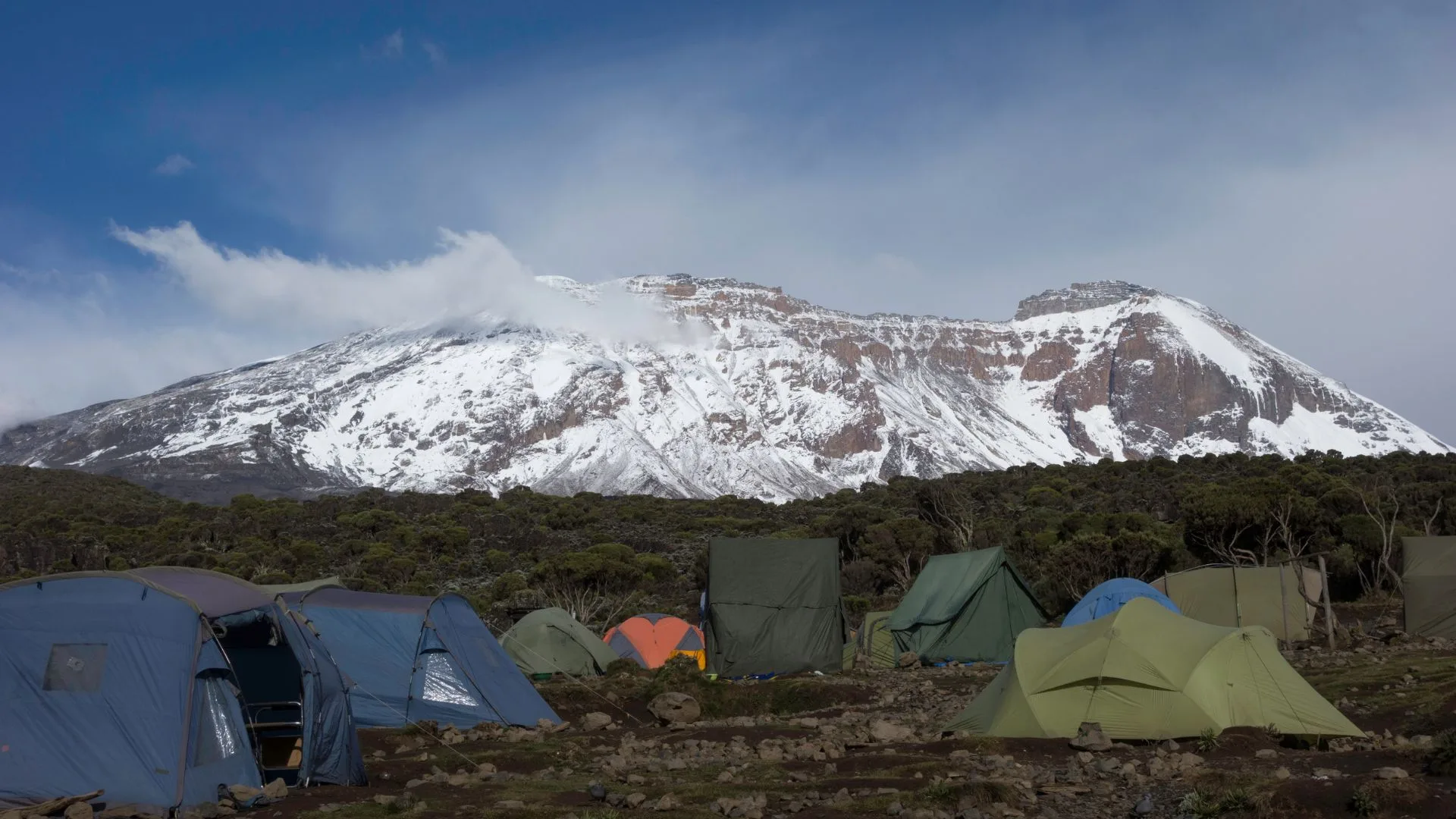
Climbing Kilimanjaro takes you through five climate zones in a week, from warm rainforest at the gate to minus 10 to minus 20 °C with wind on summit night. The secret is layers: several light pieces you add and remove, rather than one heavy coat. Your porters carry a duffel bag with up to about 15 kg of your gear between camps; you carry only a daypack with what you need during the day.
Use this Kilimanjaro packing list as a checklist. Items marked (rent) can usually be hired in Moshi or Arusha if you do not own them.
Key takeaways
- Pack in a soft duffel bag (no hard suitcase) of 15 kg or less, including your sleeping bag.
- Bring broken-in waterproof hiking boots. Blisters end more climbs than people expect.
- A sleeping bag rated to about minus 10 °C comfort and a warm down jacket are essential.
- Single-use plastic bags are banned in Tanzania. Use dry bags or packing cubes.
Clothing: the layer system
| Layer | What to bring | Quantity |
|---|---|---|
| Base layer | Merino or synthetic long-sleeve tops and leggings (no cotton) | 2–3 tops, 2 leggings |
| Hiking layer | Quick-dry trousers and short-sleeve shirts for the lower slopes | 2 trousers, 2–3 shirts |
| Mid layer | Fleece jacket or light insulated jacket | 1–2 |
| Warm layer | Down or synthetic insulated jacket with hood (rent) | 1 |
| Shell | Waterproof, breathable jacket and over-trousers | 1 each |
| Summit night | Insulated or fleece-lined trousers to wear under the shell | 1 |
Head, hands and feet
- Sun hat with a wide brim or a cap with neck cover
- Warm beanie and a buff or neck gaiter
- Thin liner gloves plus warm insulated gloves or mittens for summit night
- Waterproof, broken-in hiking boots with ankle support
- Comfortable camp shoes or trainers for the evenings
- 4–5 pairs of hiking socks (wool blend) and 2 pairs of liner socks
- Gaiters for the dusty scree on the descent (rent)
Sleeping and carrying
- Sleeping bag rated to about −10 °C comfort, four-season (rent)
- Sleeping bag liner for extra warmth and hygiene
- Inflatable or foam sleeping mat, if your operator does not supply one
- Duffel bag of 70–90 litres for the porters, waterproof or with a rain cover
- Daypack of 25–35 litres with a rain cover, for water, snacks, layers and camera
- Trekking poles, especially for the steep descent (rent)
- Head torch with spare batteries for summit night
Water and food
- Water bottles or a hydration bladder for 3 litres in total. On summit night use insulated bottles; bladder tubes freeze.
- Electrolyte sachets
- Your favourite energy snacks: they help when altitude kills your appetite
Your crew provides all meals and boils or treats your drinking water every day.
Health and hygiene kit
- Personal medicines and, if prescribed, acetazolamide (Diamox). Read about altitude sickness first.
- Paracetamol or ibuprofen, rehydration salts, anti-diarrhoea tablets, blister plasters
- Sunscreen SPF 50 and lip balm with SPF: the sun at altitude is fierce
- Sunglasses with UV protection (category 3 or 4)
- Hand sanitiser, wet wipes, toilet paper, a small quick-dry towel
- Toothbrush, toothpaste and any personal items
Documents and money
- Passport valid for at least six months, with your Tanzania visa
- Travel insurance covering trekking to 6,000 metres and helicopter evacuation
- Yellow fever certificate if you arrive from a country with yellow fever risk
- US dollars in clean notes from 2013 or later for crew tips
Useful extras
- Power bank: there is no electricity on the mountain, and the cold drains batteries
- Camera or phone, kept warm in an inside pocket on summit night
- Dry bags or packing cubes to keep clothes dry inside the duffel
- Earplugs and an eye mask for sleeping in busy camps
- A small notebook to record each day
What not to bring
- Plastic carrier bags: they are banned in Tanzania and can be confiscated on arrival.
- Cotton clothing: it stays wet and cold.
- Brand-new boots: wear them on several long walks first.
- Too much: porters' loads are limited, and you pay for overweight bags.
What your operator provides
A good operator supplies sleeping tents, a mess tent with tables and chairs, all meals, treated water, a toilet tent on private climbs, emergency oxygen and a first-aid kit. Check what is included before you pack, so you do not carry the same thing twice.
Frequently asked questions
How cold is it on top of Kilimanjaro?
On summit night temperatures are usually between −10 and −20 °C with wind chill. Daytime at Uhuru Peak can be close to freezing in bright sun.
Can I rent gear in Tanzania?
Yes. Sleeping bags, down jackets, poles, gaiters and duffel bags can be hired in Moshi and Arusha. Bring your own boots and base layers.
How heavy can my bag be?
Porters carry about 15 kg of your gear, including the sleeping bag. Leave the rest at your hotel.
Do I need different clothes for the safari after the climb?
Yes: lighter, neutral-coloured clothes. See what to pack for a Tanzania safari.
Ready to go? Choose your route on our Kilimanjaro climbs page.