


For most travellers, the vaccinations usually recommended for Tanzania are your routine vaccines plus hepatitis A and typhoid, with hepatitis B, rabies or cholera sometimes advised depending on your trip. A yellow fever certificate is only required if you arrive from, or transit through, a country with yellow fever risk. Malaria is present in the safari parks and on Zanzibar, so antimalarial tablets are usually recommended.
This is general guidance. See a travel clinic or doctor six to eight weeks before you travel for advice based on your health, age and itinerary.
Key takeaways
- Visit a travel clinic 6 to 8 weeks before you fly; some vaccines need several weeks or doses.
- Yellow fever: the certificate is required if you come from a risk country (including a stop of more than 12 hours in Kenya).
- Malaria: risk below about 1,800 metres, including the Serengeti, Tarangire and Zanzibar. Take tablets and avoid bites.
- Get travel insurance with medical evacuation cover, especially for Kilimanjaro or remote parks.
Vaccinations for Tanzania
| Vaccine | Usually advised? | Notes |
|---|---|---|
| Routine (MMR, diphtheria-tetanus-polio) | Yes | Make sure you are up to date |
| Hepatitis A | Yes | Spread through food and water |
| Typhoid | Yes, for most travellers | Especially if eating outside lodges and hotels |
| Hepatitis B | Sometimes | Longer stays or medical/close contact |
| Rabies | Sometimes | Remote areas, long stays, working with animals, children |
| Cholera | Sometimes | Humanitarian work or areas with outbreaks |
| Yellow fever | Only in some cases | See below |
Yellow fever certificate
Tanzania asks for a yellow fever vaccination certificate from travellers aged one year or over who arrive from a country with a risk of yellow fever, or who spent more than 12 hours in transit at an airport in such a country. Kenya, Uganda and Ethiopia are among them, so a long layover in Nairobi or Addis Ababa can mean you need one. Arriving directly from Europe, the Middle East or North America, you normally do not. The certificate is valid for life. Check the current rules with your clinic, because airline staff and border officers may ask for it.
Malaria in Tanzania
Malaria is present all year in most of Tanzania below about 1,800 metres, including the northern safari parks, the southern parks and Zanzibar. The risk is highest in the rainy seasons. There is little or no malaria on the upper slopes of Kilimanjaro, but the towns at its base are in the risk area.
Antimalarial tablets
Your doctor may prescribe atovaquone-proguanil, doxycycline or mefloquine. Each has a different schedule and side effects, so choose with your doctor and finish the full course after you leave.
Avoid mosquito bites
- Use insect repellent with DEET (20 to 50%) or picaridin, especially from dusk.
- Wear long sleeves and trousers in the evening.
- Sleep under a mosquito net or in a screened room. Most lodges and camps provide nets.
If you get a fever during your trip or up to a year after it, see a doctor straight away and say you have been to a malaria area.
Food, water and everyday health
- Drink bottled, boiled or filtered water. Lodges and safari vehicles provide drinking water.
- Food at safari lodges and camps is generally safe. In towns, eat freshly cooked food.
- Wash hands often and carry sanitiser.
- The equatorial sun is strong: use high-factor sunscreen, a hat and sunglasses.
- Tsetse flies in some parks give a painful bite; wear neutral colours, not dark blue or black. See what to pack for a safari.
Altitude
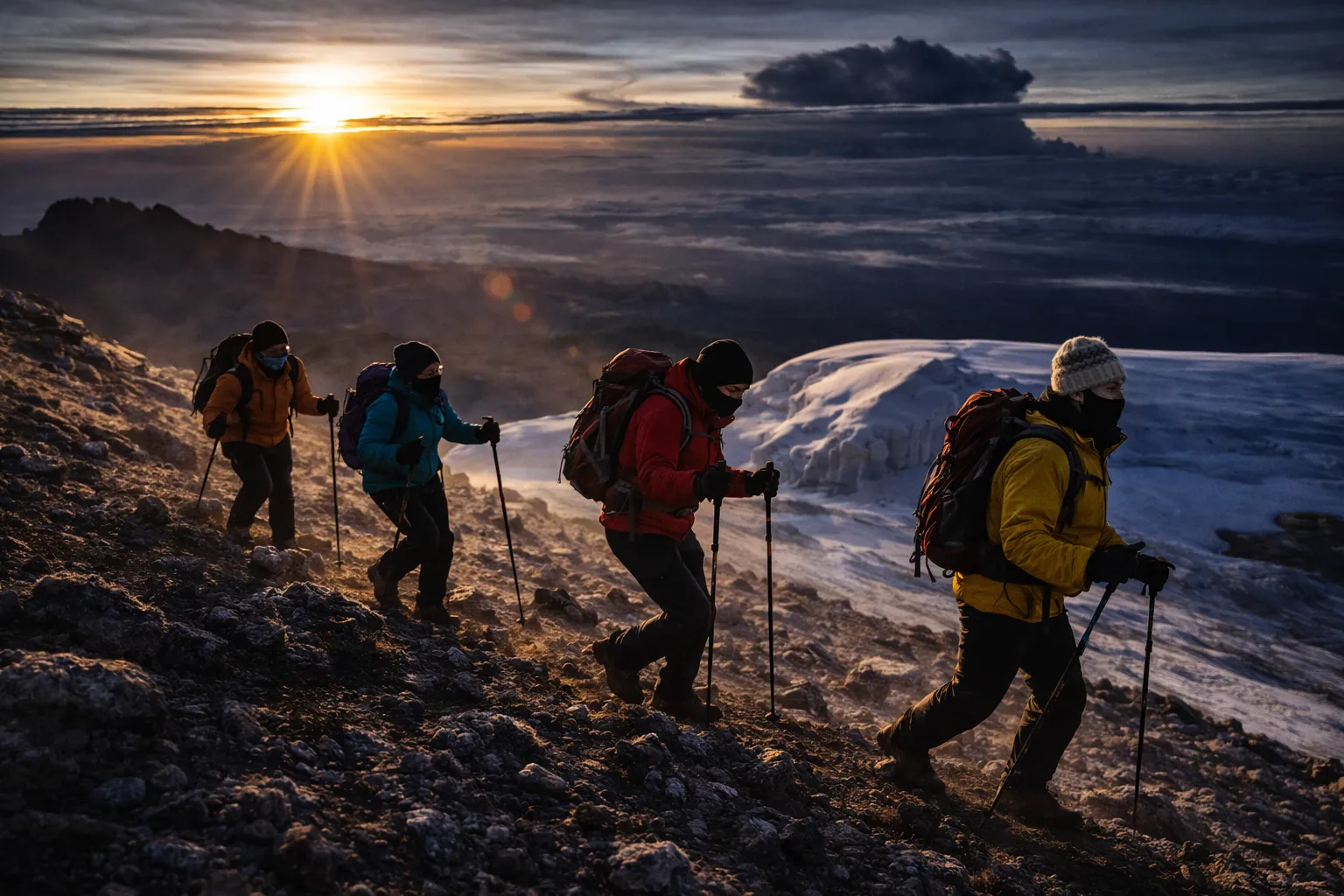
The Ngorongoro Crater rim is about 2,300 metres high, which most people do not notice. Climbing Kilimanjaro takes you to 5,895 metres, where altitude sickness is common. Read our guide to altitude sickness on Kilimanjaro.
Medical care and insurance
Arusha, Moshi, Dar es Salaam and Zanzibar have private hospitals and clinics. In remote parks, serious cases are flown out by air ambulance services such as AMREF Flying Doctors. Choose travel insurance that covers medical treatment, evacuation and, if you climb, trekking to 6,000 metres.
Reliable sources
- NHS fitfortravel: Tanzania
- CDC: Health information for travelers to Tanzania
- World Health Organization: yellow fever
Frequently asked questions
Is the yellow fever vaccine mandatory for Tanzania?
Only if you arrive from, or transit for more than 12 hours through, a country with yellow fever risk. Otherwise it is not required, though some clinics may still discuss it with you.
Is there malaria in Zanzibar?
Yes, the risk is lower than on parts of the mainland but present. Take the same precautions.
Is there malaria in the Serengeti?
Yes. The Serengeti, Tarangire and Lake Manyara are in malaria areas. Ngorongoro's rim is higher and cooler, with fewer mosquitoes, but risk remains.
Can children go on safari safely?
Yes, with the right vaccinations and antimalarials for their age. See our family safaris.
Questions about your trip? Read is Tanzania safe, or ask our team.