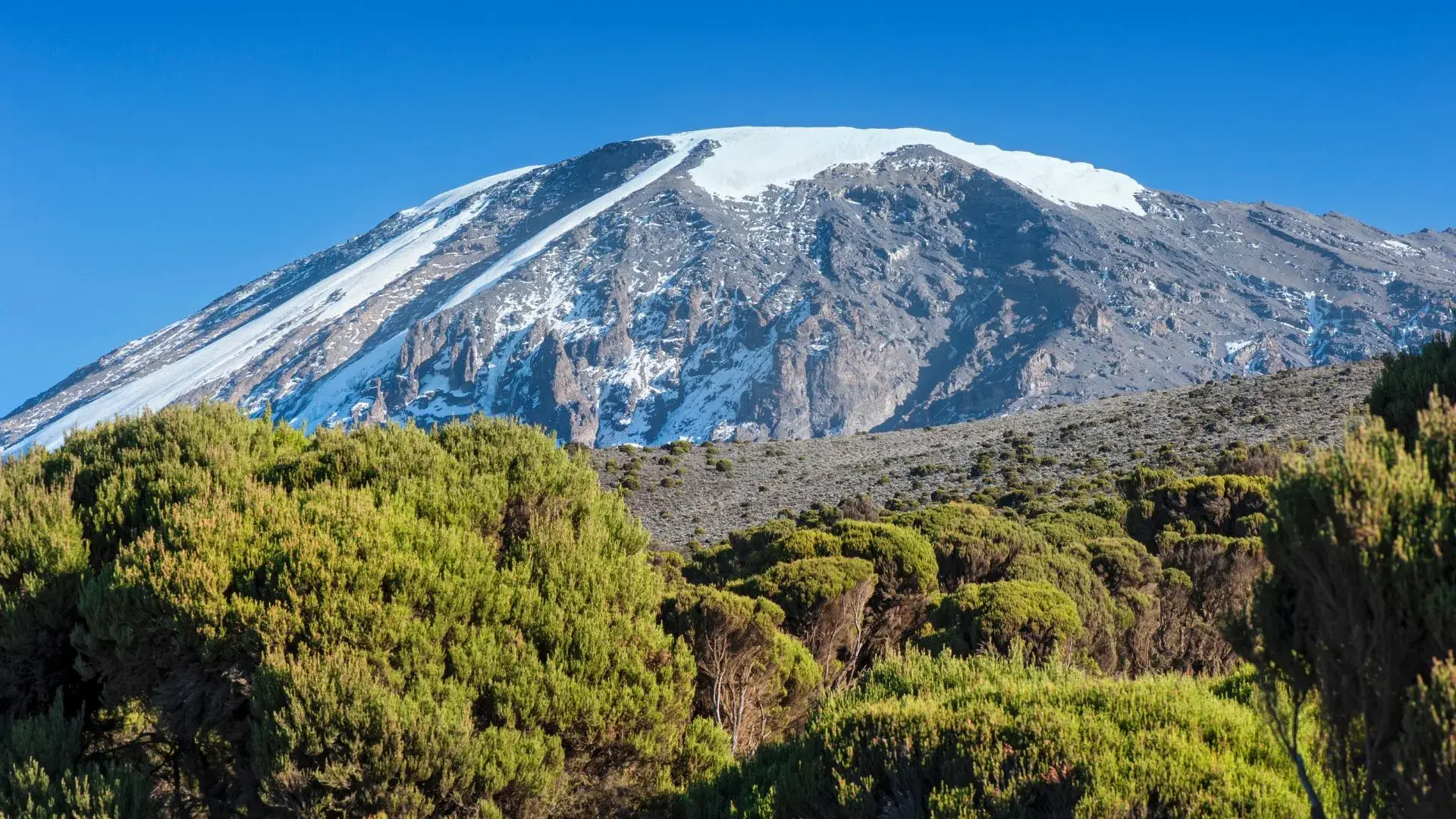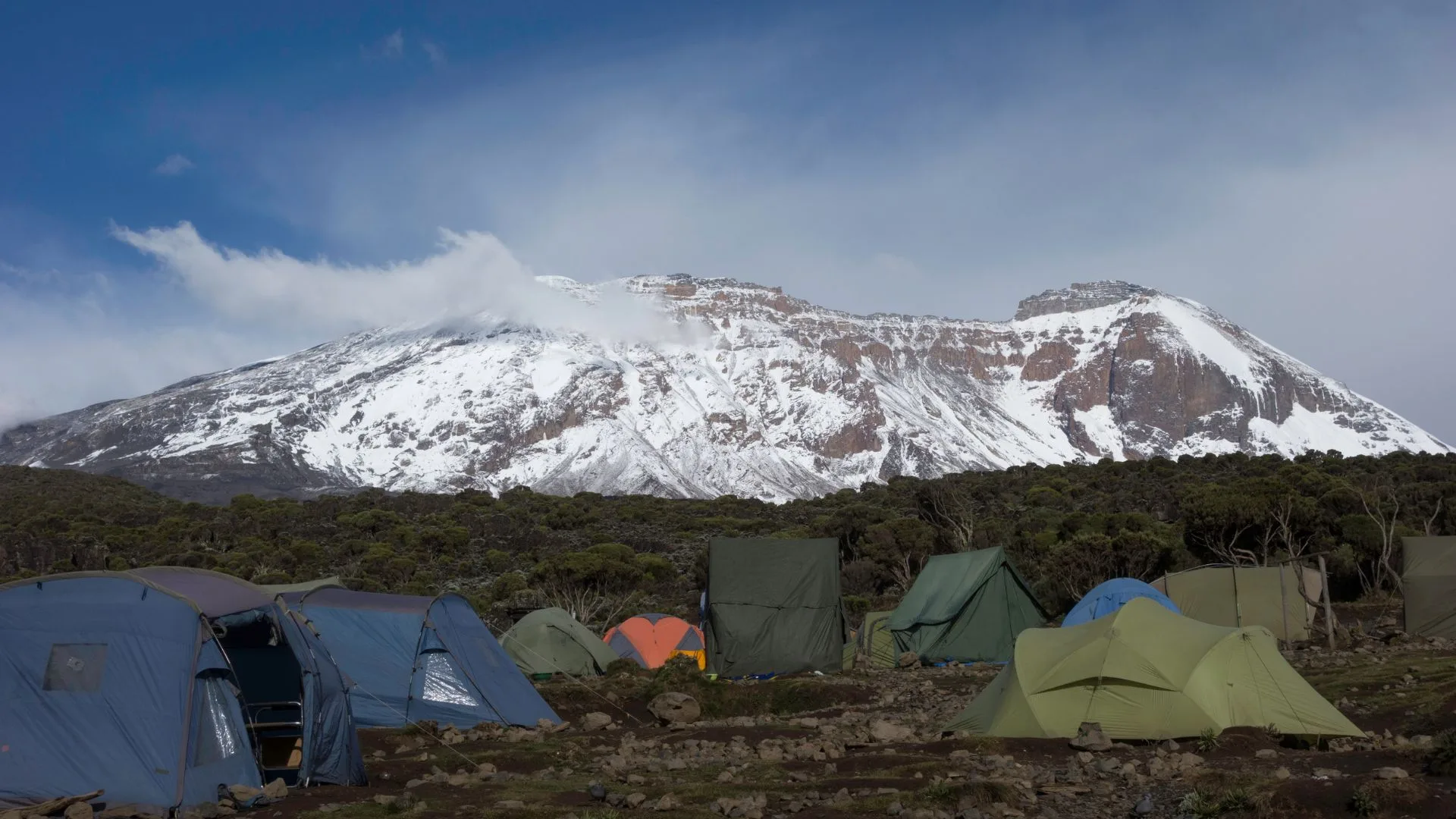



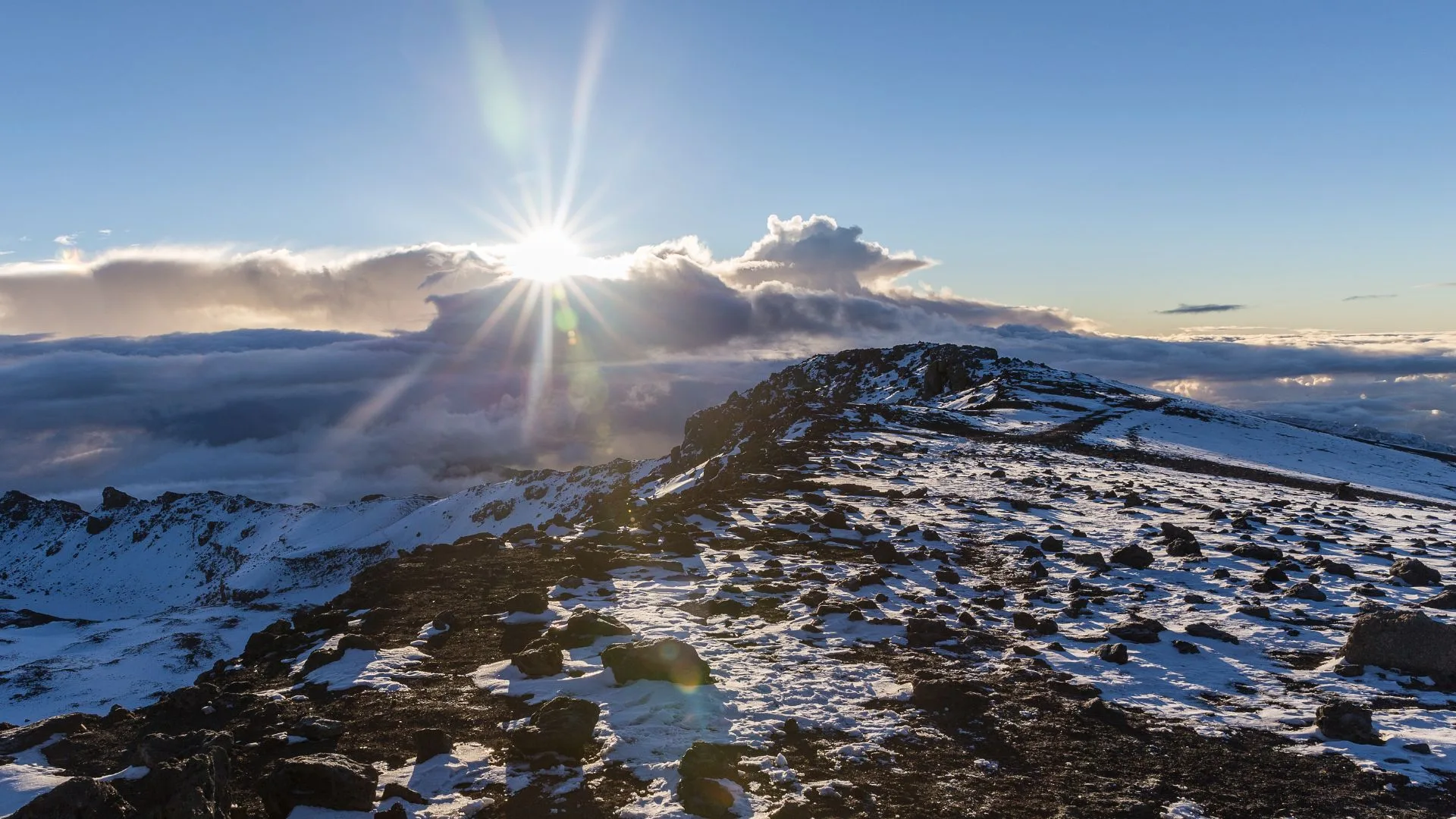
Climbing Kilimanjaro is hard, but it is not technical. You need no ropes, ice axes or climbing experience: it is a long walk on good trails. What makes it difficult is the altitude, the cold and summit night, when you start walking around midnight and climb for six to eight hours to reach Uhuru Peak at 5,895 metres. With enough days, steady training and a good crew, most healthy people with a reasonable level of fitness can do it.
Key takeaways
- Altitude, not fitness, is the main reason people do not reach the summit. Extra days matter more than extra training.
- Summit success is much higher on 7 to 9-day routes than on 5 to 6-day routes.
- Most walking days are 4 to 7 hours. Summit day is 12 to 16 hours including the descent.
- Train for 8 to 12 weeks with long hill walks, ideally with a loaded daypack.
What makes Kilimanjaro difficult
1. The altitude
Above 3,000 metres there is noticeably less oxygen, and at the summit about half as much as at sea level. Headaches, breathlessness and poor sleep are common. Our guide to altitude sickness on Kilimanjaro explains how to prevent it.
2. Summit night
You leave high camp (Barafu at 4,673 metres or Kibo Hut at 4,720 metres) around midnight and climb steep switchbacks in the dark and cold to Stella Point or Gilman's Point on the crater rim, then on to Uhuru Peak. You then descend to a lower camp. It is the longest and toughest day.
3. Many days in a row
Each day is manageable, but a week of walking, sleeping in tents and eating at altitude is tiring. Mental strength matters as much as legs.
4. Cold and weather
Nights at high camps are below freezing, and the summit can reach −20 °C with wind chill. Good layers make a huge difference: see the Kilimanjaro packing list.
5. The descent
Coming down 2,000 to 2,800 metres in a day and a half is hard on knees. Trekking poles help.
Kilimanjaro success rates
There are no official figures from the park, but the pattern reported by guides and operators is consistent: the more days, the higher the success rate.
| Days on the mountain | Typical summit success |
|---|---|
| 5 days | Low; many climbers turn back with altitude sickness |
| 6 days | Moderate |
| 7 days | High |
| 8–9 days | Highest |
Which route is easiest?
No route is easy, but some are gentler. The Marangu route has huts and a gradual path, but it is often done in only 5 days, which hurts success. The Rongai route is gentle and quiet. The Lemosho route and the Northern Circuit take longer and give the best acclimatisation. The Umbwe route is the steepest and best left to experienced hikers.
Who can climb Kilimanjaro?
- Age: the minimum age to go to the summit is 10. Many climbers in their 60s and 70s succeed every year.
- Fitness: you should be able to walk 6 to 8 hours a day over several days, on hills, without great difficulty.
- Health: see a doctor first if you have heart or lung problems, high blood pressure or other conditions.
- Experience: none needed, though a multi-day hike beforehand is a great test.
A simple 12-week training plan
| Weeks | Focus | Each week |
|---|---|---|
| 1–4 | Build a base | 3 sessions of 30–45 minutes (brisk walking, cycling, swimming) plus one 2–3 hour walk |
| 5–8 | Hills and strength | 3 cardio sessions including stairs or hills, 2 strength sessions (squats, lunges, step-ups, core), one 4–5 hour hill walk with a 5–7 kg daypack |
| 9–11 | Back-to-back days | Two long hill walks on consecutive days (5–7 hours each) wearing your boots and pack |
| 12 | Taper | Short, easy walks; rest, sleep well and stay healthy before you fly |
If you live somewhere flat, use stairs, a treadmill on incline or a step machine. A weekend at altitude (above 2,500 metres) before the trip is a bonus but not required.
Tips that make the climb easier
- Choose 7 or more days. It is the single biggest factor.
- Walk slowly from day one, even when you feel strong.
- Drink 3 to 4 litres of water a day and keep eating.
- Sleep well before the climb: arrive in Tanzania a day or two early.
- Pick an operator with experienced guides, daily health checks and emergency oxygen. See what a fair Kilimanjaro price includes.
Frequently asked questions
Is Kilimanjaro harder than Everest Base Camp?
Kilimanjaro's summit is about 500 metres higher than Everest Base Camp and is reached in fewer days, so the altitude gain is faster and summit night is tougher. Everest Base Camp is a longer trek with more days of walking.
Can a beginner climb Kilimanjaro?
Yes. Many climbers have never done a high mountain before. Train well, choose a longer route and listen to your guides.
How long does it take to climb Kilimanjaro?
Between 5 and 9 days on the mountain, depending on the route. We recommend at least 7.
What is the best time to climb?
January to early March and June to October are the driest months. See the best time to climb Kilimanjaro.
Compare all six routes with their day-by-day altitude profiles on our Kilimanjaro climbs page.