


The wildebeest migration happens all year round. Around 1.5 million wildebeest, with hundreds of thousands of zebra and gazelle, move in a loop through Tanzania's Serengeti and Kenya's Masai Mara, following the rain and fresh grass. What changes each month is where the herds are and what they are doing:
- January to March: calving season in the southern Serengeti, with around half a million calves born, most of them in February.
- April to May: the herds move north-west through the central Serengeti during the long rains.
- June to July: the herds cross the Grumeti River in the Western Corridor.
- July to October: the famous Mara River crossings in the northern Serengeti, at their peak in August and September.
- November to December: the herds walk back south with the short rains.
So the best time to see the wildebeest migration depends on what you want to see. This guide shows where the herds are in every month, which part of the Serengeti to stay in, and how many days you need.
Wildebeest migration calendar: where the herds are each month
The herds follow the rain, so dates shift by a few weeks from year to year. Use this table as a guide to where to base yourself, and ask us for the latest movements before you book.
| Month | Where the herds usually are | What you see |
|---|---|---|
| January | Southern Serengeti and Ndutu | Herds settle on the short-grass plains; calving begins |
| February | Southern Serengeti and Ndutu | Peak calving and the most predator action of the year |
| March | Southern Serengeti | Young calves, big herds, lion and cheetah hunts |
| April | Southern and central Serengeti | Herds start moving north-west; long rains, few visitors |
| May | Central Serengeti (Seronera) | Long columns of wildebeest; the rut begins |
| June | Western Corridor | Herds gather at the Grumeti River; first crossings |
| July | Western Corridor to northern Serengeti | Grumeti crossings; herds reach the Mara River late in the month |
| August | Northern Serengeti and Masai Mara | Peak Mara River crossings |
| September | Northern Serengeti and Masai Mara | Mara River crossings continue, often in both directions |
| October | Northern Serengeti | Last crossings; herds start turning south |
| November | Eastern and central Serengeti | Herds stream south with the short rains; green plains |
| December | Southern Serengeti | Herds arrive back on the calving grounds |
Know your travel month? Tell us when you can travel and we will tell you where the herds should be, and which camp puts you closest to them.
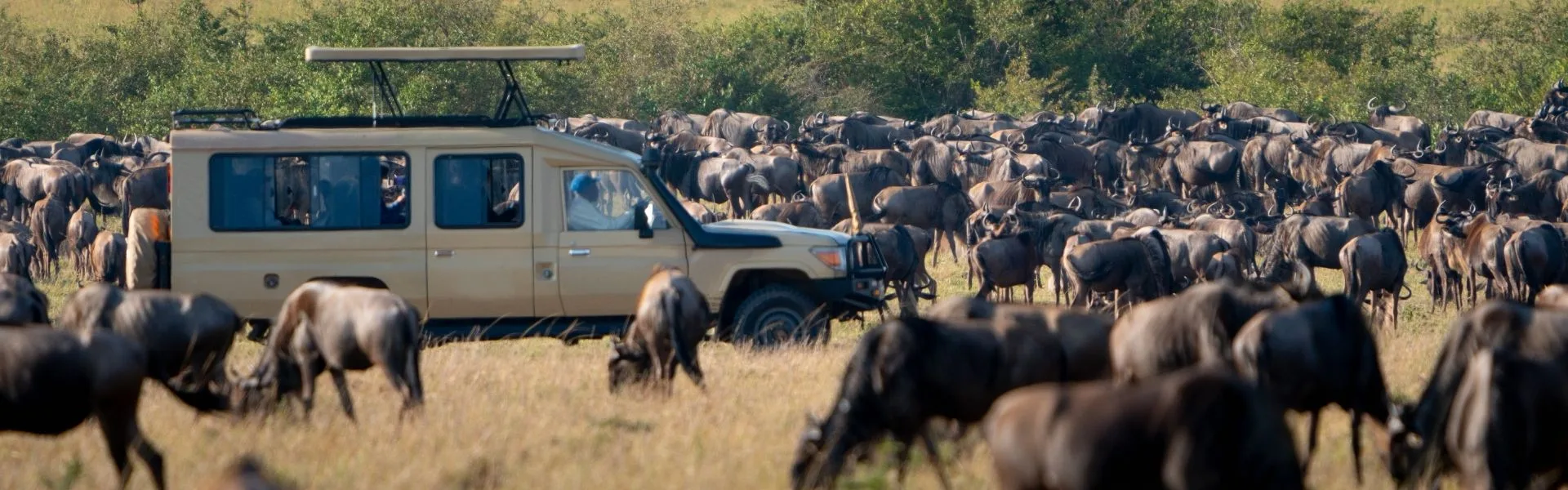
When is the best time to see the wildebeest migration?
There is no single best month. Each season offers something different, so start with what you most want to see.
- For river crossings: August and September, in the northern Serengeti. Crossings can start in late July and carry on into October.
- For baby animals and predators: late January to early March, in the southern Serengeti around Ndutu.
- For fewer crowds and better prices: November, and April to May. Some camps close during the long rains, so book where the herds are.
- For a first safari with good weather: June and July, when the dry season starts and the herds are in the west.
The migration also fits well with other trips. June to October is the dry season for climbing Mount Kilimanjaro, and the herds are in the Serengeti while Zanzibar enjoys its best beach weather. Our guide to the best time to visit Tanzania covers each season in more detail.
The migration season by season
January to March: calving season in the southern Serengeti
The herds gather on the short-grass plains of the southern Serengeti and the Ndutu area of the Ngorongoro Conservation Area. The grass here is rich in minerals, which the mothers need. Most calves are born within a few weeks around February, and several thousand can be born in a single day. The newborns draw lion, cheetah and hyena, so this is one of the best times of year to watch predators hunt.
Stay close to the action at a mobile camp in the south, such as Land of Nature Camp.
April to May: the long rains and the move north-west
As the long rains arrive and the southern plains are grazed out, the herds move north-west through the central Serengeti around Seronera. Game drives are quiet, the plains are green and the birdlife is excellent. Many lodges offer green-season rates, so this is good value. Expect afternoon showers and some muddy roads.
Central lodges such as Zuri Serengeti Camp, Serengeti Serena Safari Lodge and Four Seasons Safari Lodge are well placed as the herds pass through.
June to July: the Western Corridor and the Grumeti River
By June, long columns of wildebeest stretch through the Western Corridor towards the Grumeti River. The Grumeti crossings are less predictable and much less crowded than the Mara River crossings, and the river is known for its very large Nile crocodiles. This is also the start of the dry season, with clear skies and cool mornings.
July to October: the Mara River crossings
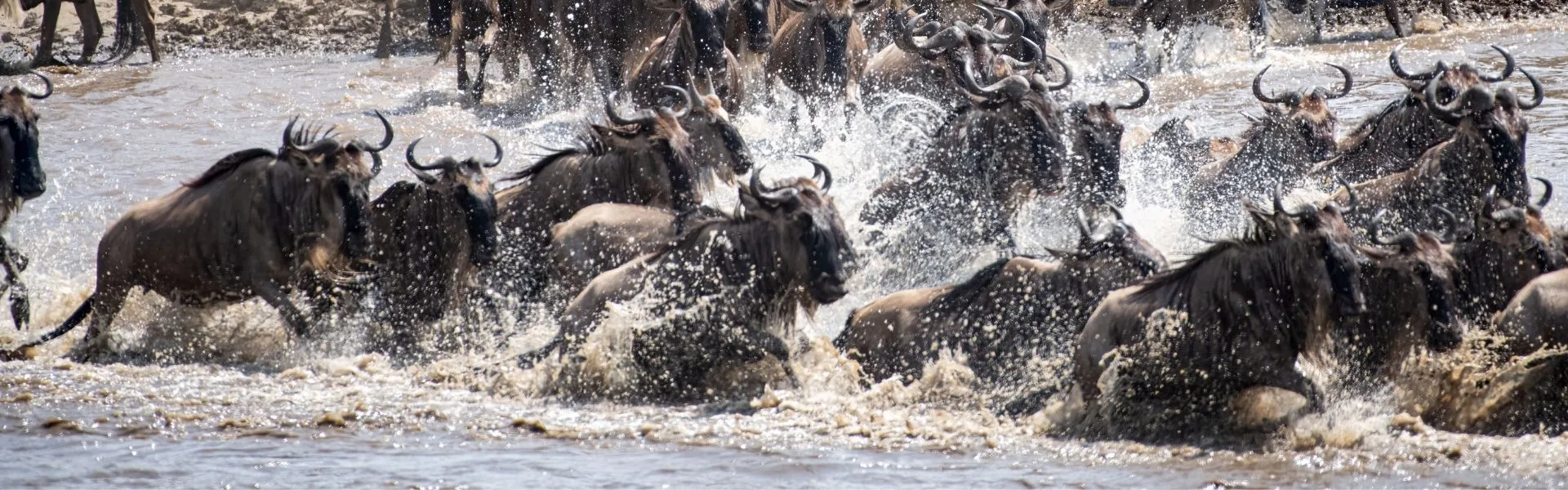
This is the most famous part of the migration. The herds reach the northern Serengeti and the Mara River, where thousands of wildebeest plunge down steep banks into a river full of crocodiles. Some of the herds cross into Kenya's Masai Mara, then cross back again as the grazing changes.
Crossings do not happen every day. The herds can gather on the bank for hours and then turn away. Give yourself at least three nights in the north, around Kogatende and the Lamai Triangle, for a good chance of seeing one. Camps here often book out six to twelve months ahead.
November to December: the return south
With the short rains in November, the herds turn south through the eastern Serengeti towards the calving grounds. The plains turn green again, the light is beautiful for photography, and there are fewer visitors. It is a superb time for a quieter safari at lower prices.
Serengeti or Masai Mara: where should you watch the migration?
The herds spend most of the year in Tanzania. They are in the Serengeti from about November to July, and they share the northern Serengeti with Kenya's Masai Mara from August to October. That means a Tanzania safari can follow the migration in any month, while the Masai Mara is best for the river crossings only.
The Serengeti is also much larger, at around 14,750 square kilometres. Away from the busiest crossing points, you often share a sighting with only a few vehicles. The park is a UNESCO World Heritage Site and is managed by Tanzania National Parks.
How many days do you need to see the migration?
Plan on at least two full days in the Serengeti, and three or more if river crossings are your goal. Most visitors combine the Serengeti with Tarangire and the Ngorongoro Crater, one of the best places in Africa to see the Big Five in a day. Here are three ways to do it:
- 6 days: our Great Migration Encounter is timed to the herds, with a sunrise balloon flight over the Serengeti, Tarangire's elephants and a day in the Ngorongoro Crater.
- 8 days: the Ultimate Northern Circuit adds Lake Manyara and gives you three days in the Serengeti, at an unhurried pace in a private vehicle.
- 7 to 8 days with a beach: the Serengeti and Zanzibar honeymoon and the 8-day luxury safari end with a flight to Zanzibar's beaches.
Every safari is private, so we can add nights in the right part of the Serengeti for your month, or a short flight to the north for the Mara River crossings.
Tips for your migration safari
- Book early for July to October. Northern camps fill six to twelve months ahead.
- Stay where the herds are. The Serengeti is huge, and the right camp can save you hours of driving every day.
- Take a balloon flight. A sunrise balloon over the plains shows the true scale of the herds.
- Bring the right lens. A 200 to 400 mm telephoto lens is ideal for crossings and predators, and a wide-angle lens captures the size of the herds. Use burst mode during crossings.
- Be patient at the river. Your guide will read the herds and the wind, and waiting is part of the experience.
Conservation and the future of the migration
The Serengeti-Mara ecosystem faces pressure from poaching, development and human-wildlife conflict along its borders. Responsible tourism helps: park fees fund ranger patrols and conservation, and many camps support local communities. Choosing operators who invest in local people helps the migration continue for generations to come.
Frequently asked questions about the wildebeest migration
When is the wildebeest migration?
The wildebeest migration happens all year round. Calving takes place from January to March in the southern Serengeti, the Grumeti River crossings happen in June and July, and the Mara River crossings run from July to October.
What is the best month to see a river crossing?
August and September are the best months for Mara River crossings in the northern Serengeti. Crossings can also happen in late July and October.
Can you see the migration in December?
Yes. In December the herds arrive back in the southern Serengeti, ready for calving. It is a quieter and greener time to visit.
How many animals are in the Great Migration?
Around 1.5 million wildebeest travel with several hundred thousand zebra and gazelle, making it the largest overland movement of mammals on Earth.
Is the migration better in Tanzania or Kenya?
The herds spend most of the year in Tanzania's Serengeti and only reach Kenya's Masai Mara from about August to October. A Tanzania safari lets you see the migration in any month.
How far ahead should I book a migration safari?
Book six to twelve months ahead for July to October, when northern Serengeti camps fill first. For other months, three to six months is usually enough.
Plan your wildebeest migration safari
The wildebeest migration is in the Serengeti every month of the year. The key is being in the right place at the right time. Tell us your travel dates and what you most want to see, and our Arusha-based team will plan a private safari that puts you close to the herds.


