


Tanzanian food is hearty, simple and shaped by many cultures: African staples like ugali, grilled meat called nyama choma, and spiced rice such as pilau, brought by centuries of trade with Arabia and India. On Zanzibar and the coast, coconut, seafood and spices take over. Here are the dishes and drinks to try, and what to expect on safari.
Classic Tanzanian dishes
1. Ugali
The national staple: a stiff porridge of maize flour, eaten with your right hand and used to scoop up stews, greens and meat.
2. Nyama choma
Grilled meat, usually goat or beef, slow-cooked over charcoal and served with salt, chilli and kachumbari. Tanzanians share it with friends on weekends.
3. Pilau
Rice cooked with cumin, cardamom, cinnamon, cloves and meat or chicken, a dish for celebrations.
4. Chipsi mayai
Tanzania's favourite street food: chips cooked into an omelette, with ketchup and chilli.
5. Mishkaki
Marinated meat skewers grilled on street corners in the evening.
6. Wali na maharage
Rice with beans in coconut sauce, a filling everyday lunch.
7. Ndizi na nyama (mtori)
Green bananas cooked with meat into a stew. On Kilimanjaro's slopes, the Chagga people make a banana soup called mtori.
8. Kachumbari
A fresh salad of tomato, onion, chilli and coriander, served with almost everything.
9. Chapati and mandazi
Soft, flaky flatbread from Indian tradition, and sweet fried dough often flavoured with cardamom or coconut, perfect with tea.
10. Mchicha
Leafy greens cooked with tomato, onion and sometimes peanuts or coconut.
Zanzibar and coastal food
11. Zanzibar pizza
A thin dough parcel filled with minced meat, egg, onion and cheese (or a sweet filling of banana and chocolate), fried on a griddle at Forodhani Gardens in Stone Town.
12. Urojo (Zanzibar mix)
A tangy soup with mango, potatoes, fritters, chutney and crispy toppings.
13. Samaki wa kupaka
Grilled fish in a rich coconut and spice sauce.
14. Octopus curry and seafood
Fresh octopus, prawns, lobster and calamari cooked with coconut and spices from the island's farms.
Explore more in our guide to things to do in Zanzibar, including a spice tour.
Drinks
- Chai: spiced, milky tea drunk at breakfast and in the afternoon.
- Coffee: Arabica from the slopes of Kilimanjaro and Mount Meru. Try a coffee farm tour at Materuni.
- Fresh juices: passion fruit, mango, sugarcane and avocado.
- Local beers: Kilimanjaro, Safari and Serengeti lagers; ask for "bia baridi" (cold beer).
- Konyagi: a popular local spirit.
15. What you eat on safari
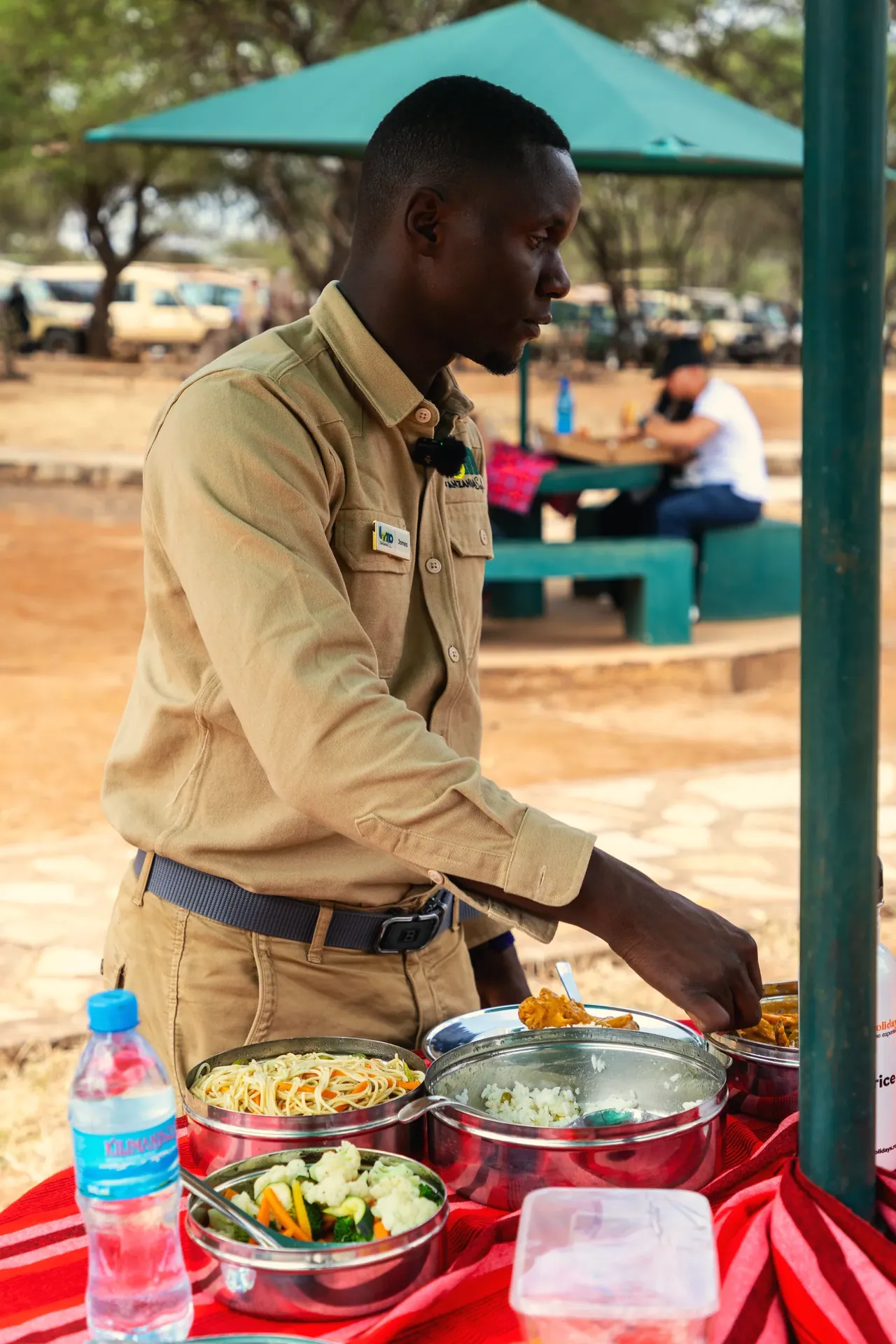
Safari lodges and camps serve international menus with local touches: cooked breakfasts, lunch buffets or picnic boxes for full-day game drives, and three-course dinners. Many camps add a bush breakfast or a sundowner with snacks. Vegetarian, vegan, gluten-free and halal diets are catered for with notice. On a camping safari, your cook prepares fresh meals at the campsite.
Eating on Kilimanjaro
Mountain cooks prepare surprisingly good food on gas stoves: porridge, eggs and toast in the morning; soup, pasta, rice, stews and vegetables at night. Appetite often drops with altitude, so bring your favourite snacks. See the Kilimanjaro packing list.
Food etiquette
- Wash your hands before and after eating; a jug of water is often brought to the table.
- Eat and pass food with your right hand.
- During Ramadan, eat discreetly in public in Zanzibar and coastal towns.
- Say "Chakula kitamu!" (delicious food) to thank your cook. More phrases in our Swahili guide.
Frequently asked questions
What is the national dish of Tanzania?
Ugali, usually served with nyama choma or a stew and greens.
Is Tanzanian food spicy?
Mainland food is mild, with chilli sauce on the side. Zanzibar and coastal dishes are more aromatic, with spices like cloves and cardamom, rather than very hot.
Is street food safe?
Freshly cooked, hot food from busy stalls is usually fine. Avoid raw salads and unpeeled fruit if you have a sensitive stomach. See our health tips.
Want to meet the people behind the food? See our cultural safaris, or ask us to add a coffee farm or market visit to your trip.