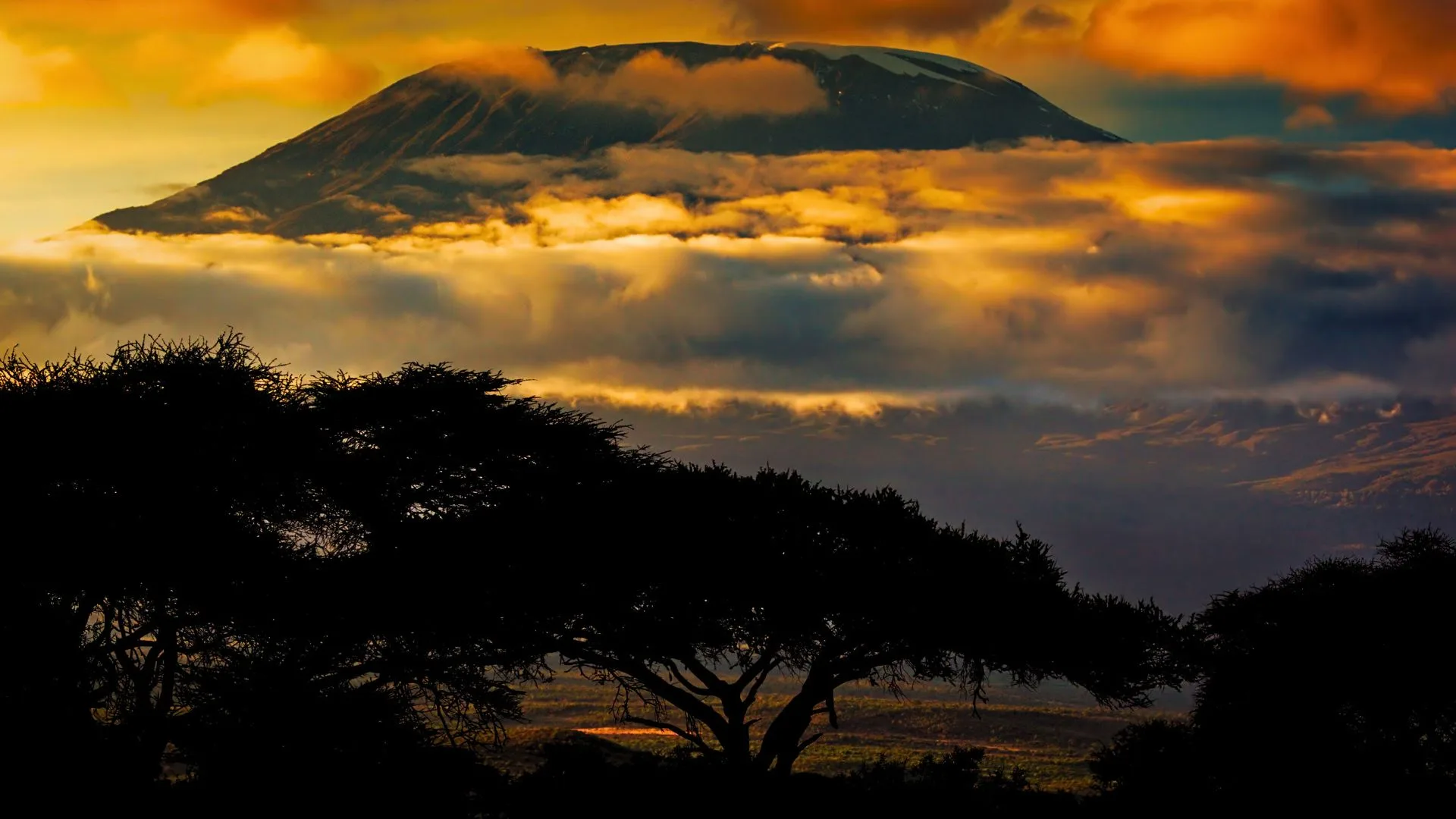


Lake Natron and Lake Eyasi are two of the most unusual places in northern Tanzania, and both are easy to add to a classic safari. Lake Natron, near the Kenyan border, is a hot, red-tinted soda lake where most of the world's lesser flamingos breed, below Ol Doinyo Lengai, the Maasai "Mountain of God" and an active volcano. Lake Eyasi, south-west of the Ngorongoro Crater, is home to the Hadzabe, among the last hunter-gatherers in Africa.
Lake Natron
Why visit
Natron feels like another planet. The lake lies in the Great Rift Valley at about 600 metres, where temperatures often pass 40 °C. Its water is highly alkaline and salty, coloured red and pink by microorganisms. Few animals can live in it, which is exactly why lesser flamingos breed here, safe from predators.
Flamingos
Lake Natron is the main breeding ground of the lesser flamingo in East Africa. Large flocks feed along the shore for much of the year, and breeding usually peaks from about August to December, depending on rainfall. The nesting areas are deep in the lake and protected, so visitors watch from the shore at a respectful distance.
Ol Doinyo Lengai
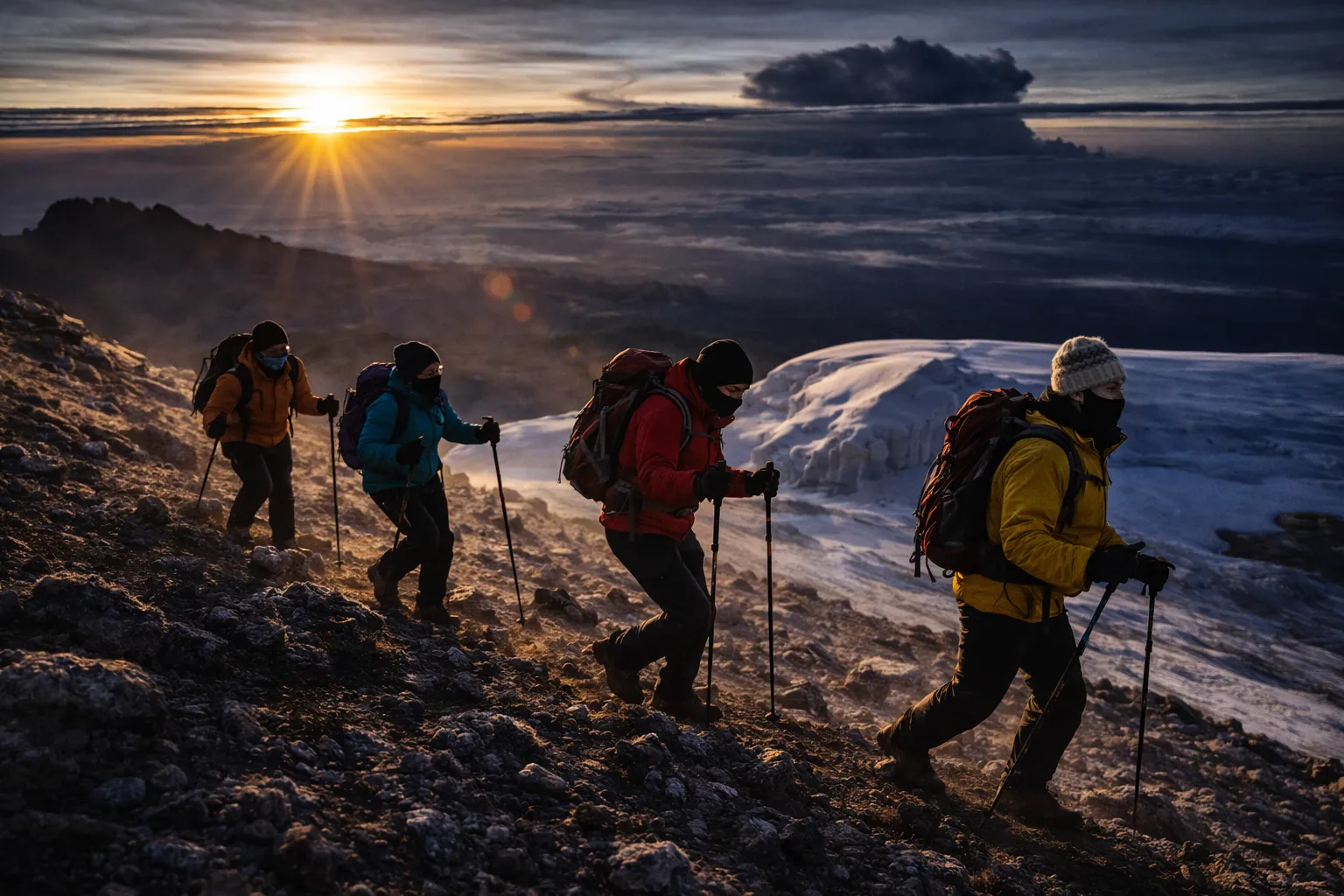
At 2,962 metres, Ol Doinyo Lengai is the only active volcano on Earth known to erupt natrocarbonatite lava, which is cooler than other lava and turns white as it cools. Experienced hikers climb it overnight to reach the crater at sunrise. It is a very steep, hard climb on loose ash, done with a local guide, and is only for fit walkers.
Engare Sero waterfall and footprints
A walk up a narrow gorge from the village of Engare Sero ends at a waterfall and pool, a welcome swim in the heat. Nearby, hundreds of ancient human footprints are preserved in volcanic mud on the lakeshore, thousands of years old.
Maasai culture
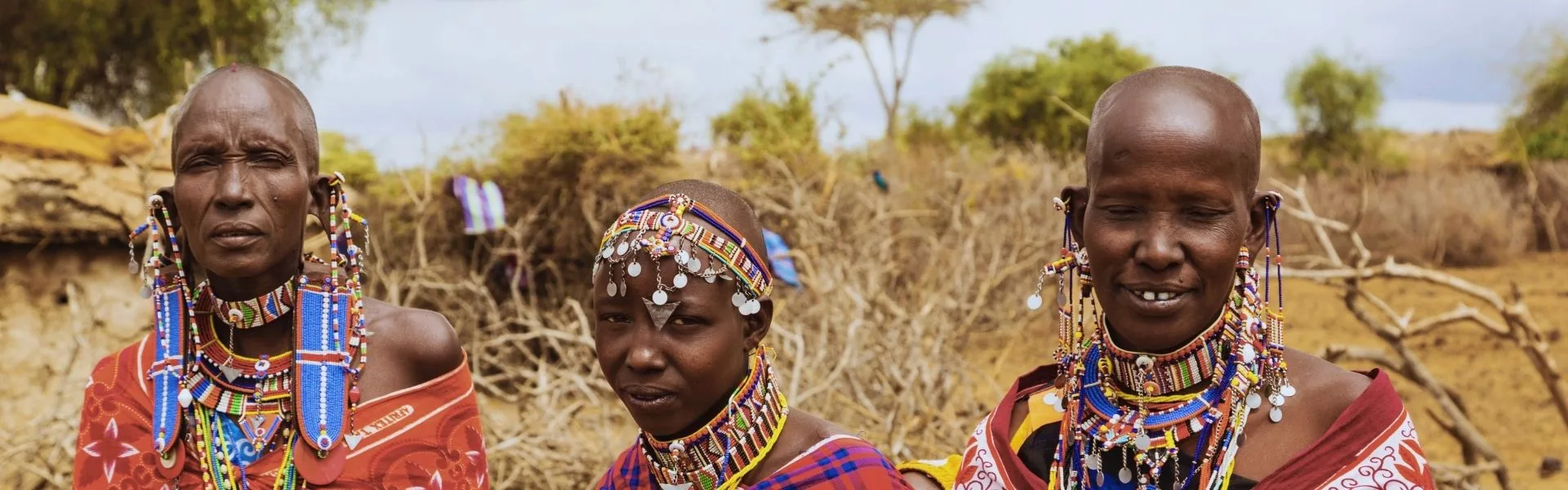
The Natron area is Maasai country. Local guides from the community lead the walks, and visits support the villages.
Lake Eyasi
Why visit
Lake Eyasi is a long, shallow soda lake below the Eyasi escarpment, surrounded by doum palms and acacia. Its main draw is people rather than wildlife: two very different cultures live along its shores.
The Hadzabe
The Hadzabe (Hadza) have lived as hunter-gatherers in this area for thousands of years. On an early-morning visit you may join a small group as they hunt with bows, gather roots and berries, make fire and talk in their click language. Choose a visit run with the community, keep groups small, and follow your guide's lead on photography.
The Datoga
The Datoga are pastoralists known for their metalwork. Blacksmiths turn scrap metal into arrowheads, jewellery and tools, often sold to the Hadzabe.
Birdlife
In the wet season the lake attracts flamingos, pelicans and many other water birds.
How to get there
| From | To Lake Natron | To Lake Eyasi |
|---|---|---|
| Arusha | About 4–5 hours by road | About 4 hours by road |
| Mto wa Mbu (Lake Manyara) | About 3 hours on a rough road | About 2 hours |
| Karatu (Ngorongoro) | About 4 hours | About 1.5 hours |
| Northern Serengeti | About 5–6 hours via Loliondo | – |
Natron is usually visited for two nights; Eyasi fits as one night between the Ngorongoro Crater and Lake Manyara. Roads are rough, so allow extra time.
When to go
- Lake Natron: June to October is driest and best for the waterfall and the Lengai climb; flamingo numbers are often highest from August to December.
- Lake Eyasi: good all year; the dry season makes roads easier.
Where to stay
Both lakes have small tented camps and simple lodges, from campsites to comfortable eco-camps with views of Lengai. Expect a simpler level of comfort than in the main parks, and part of the charm.
Frequently asked questions
Why is Lake Natron red?
Salt-loving microorganisms with red pigment thrive in its hot, alkaline water, especially in the dry season.
Does Lake Natron turn animals to stone?
Not quite. Birds that die in the lake can be preserved by its mineral-rich water and appear "calcified", which made famous photographs. The lake does not turn living animals to stone.
Is it ethical to visit the Hadzabe?
It can be, when visits are small, respectful and organised with the community so that income goes directly to them.
Can you add Lake Natron to a Serengeti safari?
Yes. Natron sits between Arusha and the northern Serengeti, so it works well on the way in or out. We can include it in a tailor-made safari.
See more of the region: cultural safaris, birding safaris and our Tanzania wildlife guide.